Showing posts with label Myths. Show all posts

Friday, October 12, 2018

My Personal God and the lion


The Karo tribe elders told me that each person has a Personal God to watch over them. That night a lion came roaring through the village right past my little tent with me in it. Man, did I hope that my Personal God was watching over me right then.
Both the Karo and Hamar tribes believe that each person has an invisible Personal God that hovers over them. While the Personal God is suppose to warn the person about any danger, one elder confided that his God must have been looking the other way when a snake bit the elder. 

Thursday, April 26, 2018

Struck by Creativity Freeze


While creating this image, I choked up. I was totally afraid to make a mistake. I couldn't continue.
Chief Bolugedong dreamed his grandfather told him to take care of the orphans in the tribe. Africa, Ethiopia, Omo region, Suri tribe. 
I'd been working on this piece for days. It's about the Suri Tribe Chief who dreamed his grandfather told him to care for the tribal orphans. When I dropped in the perfect photograph with a child from my files, I started to like the myth image. 
Then, I froze, afraid to do anything else to it. 
Fortunately, the next morning a little inner voice said, "Hey, Janis, it's not precious. It's just art. So finish it. Surprise yourself." 
Do other artists choke up, afraid to make a mistake, afraid to continue? 

Saturday, October 28, 2017

I watched a Dogon shaman dream a Bad Spirit


After scrambling down and down over steep boulder-filled trail, my interpreter and I entered the tiny village of Koundou Gina. We wanted to meet the most powerful shaman in the region.

A woman enters the outskirts of Koundou Gina village, Dogon tribe, Mali, Africa.
As we hiked through dried stalks of a corn field, my interpreter explained that many people came from distant villages to meet with Dugui Dugene (Medicine Man). We met the simple harmless-looking shaman just outside his stone house.

Powerful Dugui Dugene (Medicine Man) showing me how he removes doogu doogu from a person. Koundou Gina village, Dogon tribe, Mail, Africa.

After a bit of chatter, I asked about Doogu Doogu and other terrible things caused by bad spirits.

In an casual tenor voice, the Medicine Man explained: "The bad spirit is created by God. Both good and bad spirits are created by God."

Medicines Dugui Dugene (Medicine Man) gathers in the forest to heal people that come to Koundou Gina village from surrounding villages. Dogon tribe, Mail, Africa.

Medicine Man continued: "We don't see the bad spirits because they have much magic power. They could be right here right now. We just don't see them.

The shaman paused a bit, pointed at me. Then: "But they can see us."

Squating with his back against the mud wall of his one-room house, Medicine Man continued: "I can see them in my dream. When I sleep at night time, I can see them. 

"The bad spirit look like a man. They wear clothes. But some of them has a cow head. Some has only one hand. And some has one breast. Some look like men but not complete man. And always have two, three or ten heads. 

Then he pointed to his hand. "Some have kind of feet here. The feet are cow feet."
 
My visualization of the Dogon bad spirit as described by the Dogon tribe Medicine Man in Koundou Gina village, Mali, Africa.

When I asked Medicine Man if he was afraid of the bad spirit in his dreams, he replied nonchalantly: "Afraid some, a little bit, but not that much."

Janis: "I would be very afraid."

Medicine Man: "If you suppose to walk with bad spirit and you afraid, they always come to afraid you. And if you afraid of them, you can be crazy. You can become crazy. They can do you something bad." 

Janis: "Can I take a picture of you like you are sleeping, like you are dreaming?


Tuesday, November 8, 2016

Bedik reincarnation tool


I went to the tiny Bedik tribe in remote southeast Senegal to learn about their myths and dreams. In the village of Iwol, chief Jean Keita told me about a special instrument they used to tell if a person has come back from the dead as a baby. 

The tiny Bedik tribe has a small round instrument that tells if the new born is a reincarnation of a deceased relative. Bedik tribe, Senegal,  Africa

Chief Jean Baptiste Keita: 

I myself had a dream about a dead ancestor coming back into my family. 


My dead father come to me in a dream and talked with me.  Some days after the dream, my wife delivered a baby.  When the baby was born, he started crying.  Crying.  Crying. 


We saw the baby is not ill, but he’s crying. What can be the cause of that?   


In our village we have this small round instrument, maybe something like a small wheel. When we put that instrument on the wall, if it ever adheres, if it gets stuck when it is thrown against the wall, it means the dead parent, the dead person has come back.  If ever it falls down, it means it’s not him.


So we took that instrument, threw it against the wall.


It stuck.


Journal thoughts:
Interesting that the Bedik use a circular instrument to determine whether the new born is a deceased relative. I immediately thought of the serpent which in some myths forms a circle as it eats its own tail thus representing rebirth, reincarnation.

Wednesday, October 26, 2016

Himba shaman: "There is a secret only you know."


From my Namibia journal May 7, 2003
(This will be the introduction to my first book on African Myths)

 
Mbahuma, powerful Himba tribe shaman, near Epupa Falls, Namibia, Africa

Deep inside a mystery rattles my spirit. Today, Mbahuma, the most powerful Himba tribe shaman, mentioned a secret. His one eye watched carefully. Where the other eyeball should have been, was just an empty hole with draining fluid. I had heard that the best shaman had some deformity.


Under a scraggly, thorny shrub of a tree at the top of a dry rocky creek bed, Mbahuma told me: “You’ve been looking. You are trying to learn many things. You will find it.”


“But there is a secret,” continued Mbahuma under that lonely tree. “A secret only you know.”

Tuesday, October 25, 2016

Visiting an African Disneyland-like Museum of our Modern Beliefs


God wanted to give human beings their fullness right from the beginning, but they were incapable of receiving it, because they were still little children.

Against Heresies

St. Irenaeus (125-203 A.D.)


Chief Jean Keita, Bedik tribe, Senegal, Africa.
-->

Bedik tribe, Iwol village
Chief Jean Baptiste Keita:


-->"Our village was founded more than 900 years ago.  It was the first village which have been settled all around here.  The first one here.  And it has been in continuous existence until today.

(While the Bedik had a designated historian who I met on my first Bedik trip, it wasn’t until very recently they had any written language, French. I don’t know how the chief arrived at 900 years and forgot to ask for an explanation. But if Chief Keita was accurate about the age of Iwol village, that’s about the time Angkor Wat was completed and the second crusades got underway. )


"What makes the village so different is the specificity of the place. It is really wonderful here. You can see it is surrounded by big mountains, with big trees, sacred trees. 

"And you see, there are many sacred symbols here. You heard yesterday about the baobab tree, and the sacred Fromager tree here.

Sacred site, Bedik tribe, Iwol village, Senegal, Africa.
"We are Bediks. We are animists. And for that, we preserve our ancestor’s way of life. And Iwol is the only village which has preserved its tradition.  It’s been the same since ages.    It hasn’t changed.


"We are the only people that have remained rooted in their traditions. We are the only ones who have preserved in tact our tradition. 

"And we live only in this place.  We are quite restricted.  We are not numerous, we Bediks."


Bedik village of Iwol, Senegal, Africa.


Personal journal thoughts: 

  
Was this the religion of our ancient ancestors? Did storytellers like Jesus, Buddha, Muhammad and Constantine whisper their variations of the Bedik stories I heard into followers’ ears just like players in the telephone game?


My being tingled with the pure joy of mystery. There was more here than I could see and immediately understand.   

I certainly was in a Disneyland-like museum of our modern beliefs.
.


Friday, May 6, 2016

Can I see the bees that killed the attacking Muslims?


Bedik tribe village of Iwol in the remote southeast corner of Senegal, Africa.


In the history of the remote Bedik tribe in remote southeast Senegal, Muslims wanted to convert the tribe to Islam. The tribe didn't want to be converted. So the Muslims attacked. 

"It was terrible," explained Chief Keita. "Many Bedik were killed." Then the Bedik prayed. Their Spirits had mercy and sent bees to kill the attacking Muslims. 

"Yes, the bees live in a tree right near here in the middle of the village," explained Chief Keita. When I asked if I could photograph the bees, the chief replied, "of course you can." 
 

"They look like ordinary bees. I will show you where they live in a tree here in the center of the village. Right near here.


"And it’s totally possible to take a picture of the bees.
  
We can send a boy to see if they are there.  If they are there, you can go and take a picture.  If not, you did not come at the right time."

Here's what I saw.


Chief Keita explained that the bees live in this tree. Bedik tribe, Senegal, Africa.


From my journal that night:

As we waited for the messenger boy to come back, a gentle breeze came over us. Somehow I felt I was listening to a story that, like a musical score, needs to be interpreted to fully understand. 


I felt I was like Napoleon’s soldier who found the Rosetta stone, but instead of linking texts, might this be the Rosetta stone to a deeper understanding of the roots to today’s spiritual and cultural beliefs? 

Somehow here with the Bedik we still have a balance between Mythos and logos. Yet somehow clear understanding seemed tantalizingly just out of my reach.


Please respect that all images are copyrighted 
© Janis Miglavs 2016
janis@jmiglavs.com


Wednesday, December 30, 2015

Water Spirit commands the village women to quit polluting the spring


I went to the isolated Bedik tribe in the most remote corner of southeast Senegal to find how their beliefs compared to those I grew up with.

Iwol village, Bedik tribe, remote southeast corner of Senegal, Africa.

When I asked Jean Babtist Keita, the Bedik Chief of Iwol village, about God, he explained that they had one Super God and many Spirits.


Chief Jean Babtist Keita, Iwol Village, Bedik tribe, Senegal, Africa.
  

Chief Keita told me a story to illustrate their idea of a Spirit: "Once our women went to the village spring to fetch water. But they did not take care of the place. They were spoiling the water."

 
Iwol village, Bedik tribe, Senegal, Africa.


"One day when they went there, they saw into the water a face, a white face, a bearded face.

 Chief Keita continues: "They were afraid. They rushed back home.

"When they arrived, I asked them, 'what did you see?'

"'We saw a white face on the water,'

"Are you sure it was not your own faces? Did you bent down and see your own faces?

"'No,' the women replied.

"Then I knew certainly it was one spirit. Maybe the spirit in charge of the water, who wanted to tell them to take more care of the water.

"From that day, the women tried to take more care of the place.  Since then nothing more."


Kids going to fetch water. Iwol Village, Bedik tribe, Senegal, Africa.


This is my illustration of the Water Spirit from Chief Keita's description.

A Water Spirit came to warn the village women to quit polluting the spring. Chief Jean Keita told me that the Water Spirit had a white face with a beard and wings that looked like bat wings. Guess what? After seeing the spirit, the women took better care of the village spring.  Iwol village, Bedik tribe, Senegal, Africa.


When I asked Chief Keita to sketch a spirit, this is his drawing. He said that everything was accurate, but he didn't know how to draw the feet.   Iwol village, Bedik tribe, Senegal, Africa.


All photographs and text © 2015 Janis Miglavs
janis@jmiglavs.com

Sunday, April 26, 2015

My new website born from 15 years of learning from remote African tribes

These Konso tribe children gave me a hard time because I only knew 20 Konso words (and I had to look at my cheat sheet for most of those). But that didn't stop us from having lots of fun together.  We all have five fingers.  Konso tribe, Ethiopia, Africa.

On my first trip to Ethiopia's remote Omo region, the Konso tribe elders were telling me about their myths, stories, beliefs and archetypal dreams.
 
After several hours of a lively interview, I asked what advice the elders would give to world’s leaders. Now, you need to know that at that time, these guys had heard about Europe but only vaguely knew about the United States.  So world leaders to them mostly meant the elders and chiefs of neighboring tribes.

After a long silence, one elder slowly, deliberately replied: “We’re all made by God. We are all the same, no matter what tribe or what we believe.” 

He then raised his hand with outstretched fingers: “We all have five fingers.”


We all have five fingers inspires the Five Fingers Project.

With those simple words spoken in Ethiopia, near the very place where anthropologists first dug up bones of our evolutionary ancestors, my project, my life's purpose, my life's mission was born. 

Now, after 15 years of hearing tribal storytellers in the human Garden of Eden—Africa, the place DNA and anthropologists say all of us humans originated—I have no doubt those living stories confirm that the Konso elder was right in many many ways. We all have five fingers.

Now I would like to share my personal experiences with the myths, stories and archetypal dreams I learned from Africa's most remote tribes.  And in honor of the Konso elder's insight, I call this body of work The Five Fingers Project.

Please visit the web site born from 15 years of work. www.FiveFingersProject.org


Amazingly, the beliefs of the Mursi tribe nursing mother (Left) have many similarities to Christian beliefs represented by The Virgin as Queen of Heaven by Hans Baldung Grien (Right). We all have five fingers.

Any comments, insights and suggestions are much appreciated. 


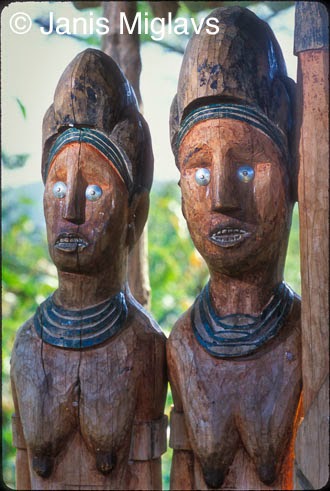
Collectors and museums steal these Konso tribe wooden statues


The Konso didn't think to preserve the wagas (wakas) until local and outside thieves began stealing them when the wooden statues became a red hot commodity for collectors and museums. They are cool looking.  Konso tribe, Ethiopia, Africa.

Wooden statues to honor their heros

Ethiopia's Konso tribe carves wooden statues called wagas (wakas) as grave markers to commemorate tribal heros. One elder defined a hero as either one who has been a good tribal leader/administrator or someone who killed a wild animal threatening the village. In the olden days, the tribe erected wagas for a warrior who killed an enemy. 

Since they are unique, collectors and museums from around the world have stolen many wagas. Naturally, the Konso have become quite protective of them. 

But I had spent days interviewing the elders to learn about their myths, stories and archetypal dreams, (plus I have a face even my wife's mother trusted—after I had been married for 8 years), so on both of my trips, amazingly, I was allowed free access to photograph all of the wagas. 


Originally these wagas (wakas) were totally exposed to weather's harsh erosion. Now a small tin roof (seen in the photo below) was errected. Konso tribe, Ethiopia, Africa.
Konso tribe, Ethiopia, Africa.


These are the hero's wifes in the grouping pictured below.  Konso tribe, Ethiopia, Africa.
The hero is the tallest wooden statue. The smaller ones surrounding him are his wives and children.  Konso tribe, Ethiopia, Africa.
This is the well prepared hero from the grouping pictured above. I could never find out why someone gave him a crown of vines. Konso tribe, Ethiopia, Africa.


I photographed these wagas on my 2001 trip. By my 2007 trip, they had disappeared. Konso tribe, Ethiopia, Africa.


This is the son of the hero for whom these wagas were errected. He is represented by one of the small wooden figures behind him on the left. Konso tribe, Ethiopia, Africa.


Konso tribe, Ethiopia, Africa.

Behind the father and his sons, you can make out the feet and torso of some family wagas. Konso tribe, Ethiopia, Africa.

On my second trip to the Konso, one of the village women challenged me when I wanted to photograph this site where waga once stood. The local culture minister jumped in to my rescue to explain I had permission from the elders. I must say, as you can see by his terse body language, he was a little harsh with the poor woman. I wanted to hug her and thank her for what she was trying to do. But me knowing only 20 words of Konso stopped me from any serious communication.  Konso tribe, Ethiopia, Africa.


On my first trip, I was shown this storage room full of wagas recovered from thieves. Then, with a smile, the caretaker offered me one. Wow, I could easily picture the wooden statue in my living room. But that was exactly the problem, so could lots of other collectors and museums. I declined the kind offer and took a photo to hang in my living room.  There is now a Konso Cultural Center displaying wagas.  Konso tribe, Ethiopia, Africa.


Wednesday, February 11, 2015

Severe diarrhea in remote Mali inspired a love note to my wife


While living on the rooftop of a remote Dogon village in Mali, Africa, I was viciously attacked by diarrhea. It controlled me. Three long tiring days and two sleepless nights of seemingly non-stop use of my precious toilet paper. 

By the third day I had no energy, no will to continue the trip. Forget finding myths and archetypal dreams among the Dogon. My sails were slack. I wanted to be home.

Dogon tribe village of Songo. Mali, Africa.
I needed to connect with my wife, Eddi.

Even though most Dogon villages had no electricity, my guide said there was one about a half day's drive with a telephone that probably worked.

Eureka. On the phone, Eddi patiently gave me love, understanding and perspective. She encouraged me to continue the journey. 

The five-minute conversation refilled my deflated seeker's sails.


That night in my journal I  wrote: "How can I ever thank you in this lifetime? Knowing that you still love me while I wallow in despair, kept me going. Like an assuring hand, your voice allowed me to again see the bright stars in the night above me, even while I lay sleepless with non-stop diarrhea. I need you like the bird needs air. No way can I soar with out your voice, your encouragement, your love.
Thank you for loving me.


Dogon tribe buildings below the long abandoned buildings of the extinct Tellem tribe built in the steep cliff above. Finding evidence of an extinct tribe was exactly the kind of situations I sought for my project.