Showing posts with label Photography. Show all posts

Thursday, April 26, 2018

Struck by Creativity Freeze


While creating this image, I choked up. I was totally afraid to make a mistake. I couldn't continue.
Chief Bolugedong dreamed his grandfather told him to take care of the orphans in the tribe. Africa, Ethiopia, Omo region, Suri tribe
I'd been working on this piece for days. It's about the Suri Tribe Chief who dreamed his grandfather told him to care for the tribal orphans. When I dropped in the perfect photograph with a child from my files, I started to like the myth image. 
Then, I froze, afraid to do anything else to it. 
Fortunately, the next morning a little inner voice said, "Hey, Janis, it's not precious. It's just art. So finish it. Surprise yourself." 
Do other artists choke up, afraid to make a mistake, afraid to continue? 

Thursday, May 26, 2016

What I didn't ask the farmer in the Birthplace of Modern Man.


In Ethiopia, for the Myth Project, I needed an image, a symbol, to represent agriculture in a more ancient time.

Driving on a remote pot-holed road out to the Omo region, I saw the perfect shot about a 1/2 mile away. A farmer working with a wooden plow pulled by oxen. The perfect ancient agriculture image.

Now, looking at the photograph on my 5K monitor one year later and 10,000 miles away, I regret not connecting with the farmer. 

Here he is working with same tools used by our ancient ancestors in the birthplace of Modern Man—Ethiopia, Africa. But he is in the 21st century. What gets him up each morning? What is his perspective about life on our planet? What are his dreams?


I only have a symbol, without the person. I could have had both.

Oh, what a huge opportunity missed. 

Monday, January 11, 2016

Wine Photographer Janis Miglavs seen in Photo District News


For the non-photographers, Photo District News is the magazine targeted towards professional photographers. So now after 40 years of using a camera to support a family and lifestyle, can I officially consider myself a professional photographer?


Before I head out on each assignment, I do this little meditation to clear my mind, so I'm approaching every winery with an explorer's excitement about seeing it for the first time. So no matter how many wineries I've visited, it/s fun and a brand new experience.


Workers in the vineyard at Changyu AFIP Global winery, Ju Gezhuang Town, Beijing city area, Miyun County, China. China wine country.

Vineyards in Beng (also called Bu) village on LanCang (also called Lantsang, Lansang and Mekong) River, in the Heng Duan (Hengduan) Mountain Range, Yunnan Province, China, Asia. China Wine country.

North America, USA, Washington, Washington, Yakima Valley, Yakima county. Stone chapel a top of Syrah vines at Red Willow Vineyard in the Yakima AVA.

The sun sets behind San Vicente de la Sonsierra village perched on a hill top overlooking vineyards in La Rioja region of northern Spain.


Winemaker Paul LeRoy in the barrel cellar at Hermannhof winery in Hermann, Missouri, USA.

Please respect that all images are copyrighted 
© Janis Miglavs 2015
janis@jmiglavs.com


Saturday, August 29, 2015

What can American social media users learn from the AK47-toting Mursi tribe?


The news of the Virginia gunman who shot a TV crew during a live broadcast shocked and saddened me. And worst of all, the cold-blooded killer filmed himself. He wanted, and got, social media attention. 


While listening to the grisly details, I kept wondering if there was a way to use social media to do the exact opposite of what the Virginia murderer did?  Instead of deranged selfish purposes, I wondered how I could use social media in beneficial ways?

That night, a teaser idea came while editing photographs from my two weeks with the remote Mursi tribe in southern Ethiopia. (The Mursi women are known for their huge clay lip plates.) I stayed at one village the entire time to get to know the people.

Sun rays break through clouds over Mago Mountain (some call it Makki Mountain) and Belle Village, Mursi Tribe, Mago National Park, Ethiopia, Africa.
On this trip I brought point-and-shoot cameras so the Mursi could photograph tourists taking snaps of lip-plated women. 
A Mursi woman with a lip plate in the Omo region of Ethiopia, Africa.
Looking at the photographs just after the Virginia shooting, it struck me how in one aspect the Mursi and American cultures are similar. Guns are easily available in both social groups. The Virginia killer apparently could easily get a gun. And most Mursi men carry AK47s (aka Kalashnikovs) and are not hesitant to use them.

Belle Village, Mursi Tribe, Mago National Park, Ethiopia, Africa.
Well, no tourists showed up in my Mursi village during my entire stay; so I handed out the cameras anyway. After teaching my guide, Andu, how to use the cameras, he in turn taught several Mursi men, who in turn taught others.

My guide Andu teaching warriors how to use a point and shoot camera. Belle Village, Mursi Tribe, Mago National Park, Ethiopia, Africa.

While I've blogged about the Mursi camera adventure before, the social-media-induced killing made me look at these photographs differently.

Belle Village, Mursi Tribe, Mago National Park, Ethiopia, Africa.
The Muris are used to being photographed by tourists for money—10 birr per shutter click, thank you. Never had they taken photographs of themselves or of anyone. I mean never held a camera. This was the first time they were behind the camera instead of in front. 

Then, I don't know if what happened was because they had a new toy, or they saw a fresh perspective, or the stars were properly aligned. But a transformation happened.

Instead of waiting around of tourists and getting drunk, they were like busy bees taking photographs.

Belle Village, Mursi Tribe, Mago National Park, Ethiopia, Africa.

Belle Village, Mursi Tribe, Mago National Park, Ethiopia, Africa.

After taking some images, they would run to the battery powered printer set up at my camp. I had solar chargers to keep the electricity flowing.


Andu, my guide, edited and printed the digital files. Since I didn't have enough paper to print everything, Andu selected what he thought were the best photographs.


Belle Village, Mursi Tribe, Mago National Park, Ethiopia, Africa.

Belle Village, Mursi Tribe, Mago National Park, Ethiopia, Africa.

After people snapped groups, couples and individuals, they started photographing their possessions—including guns and knivesand themselves doing everyday things. 

You could feel the excitement in the air. 

Kids and an elder using one of my Nikon cameras to take photographs of everyday life in Belle Village, Mursi Tribe, Mago National Park, Ethiopia, Africa.

Belle Village, Mursi Tribe, Mago National Park, Ethiopia, Africa.
Watching them was like looking over the shoulder of an American teenage Facebook user. Except this was a printed version of Facebook—a Mursi Facebook. 

Andu, my guide, kept telling me that in his 12 years with the Mursi, he had never seen them so "relaxed." It seems they had momentarily peeked out of their everyday paradigm of tourists and handouts. 


Belle Village, Mursi Tribe, Mago National Park, Ethiopia, Africa.
While I don't know how to translate this Mursi photo experience to using social media positively in a gun-happy America, I do think here among the AK47-toting Mursi, just might be an idea seed for how to use social media beneficially

Sunday, April 26, 2015

What makes these wineries perfect for wedding photography in China?


Wedding photography is big business in an increasingly affluent urban China. And it seems that newly married couples want their photographs to look as if they traveled to some romantic distant chateau. That makes some wineries a perfect photo location. 

Those considering wedding photography and wine lovers, check out these winery locations. And, you shutter clickers, peek at Chinese photographic techniques.


This wedding couple and photographer waited in line for an hour to get this popular viewpoint at the US$103 million Chateau Changyu Baron Balboa, which stands like an oasis in the desert near Shihezi, Xinjiang.
After their professional photography session, this couple wandered around the Chateau to take their own happy snaps. Chateau Changyu Baron Balboa,
Shihezi, Xinjiang.


As they head for a photo session, the bride, groom and photographer are dwarfed by the scale of the Dynasty Winery Chateau architecture.  Dynasty Fine Wines Group Ltd., Tianjin, China.
The wedding party and photographer pass the French Louvre museum copy pyramid. And why not? Dynasty Winery is a Sino-French joint venture with the huge
French alcoholic beverage company,
Rémy Cointreau.  Dynasty Fine Wines Group Ltd., Tianjin, China.
Under the watchful eyes of giant iron guards, this bride waits her turn to be photographed inside Dynasty's winery.
Dynasty Fine Wines Group Ltd., Tianjin, China.
This is one of the photographer's favorite places at Dynasty's winery. The general manager told me that the cost to rent just the winery photographic space costs between $700 to $1000, depending on the status of the customer. Photographer's fee is not included.  Dynasty Fine Wines Group Ltd., Tianjin, China.


Being only one hour out of Beijing, makes Chateau Changyu AFIP Global a favorite photo location for wedding couples.  Chateau Changyu AFIP Global, Miyun County, China.
Most of the photographers seem to use the same standard poses. Chateau Changyu AFIP Global, Miyun County, China.
Even the roof makes a suitable location for some wedding photographers. Chateau Changyu AFIP Global, Miyun County, China.
Ready, set and smile. Chateau Changyu AFIP Global, Miyun County, China.
Chateau Changyu AFIP Global offers a faux church so that a couple can be married and photographed in the same winery village.  Miyun County, China.
This focused photographer is not in the least distracted by the grape sorting line a few feet behind him. After all, Chateau AFIP Global is a very active winery during harvest. The wedding party did have to move when the tanker truck pulled out. Chateau Changyu AFIP Global, Miyun County, China.


My photographs bring emotional magic to Ethiopia's Konso tribe.


One of my most moving photographic experiences ever was in the remote Ethiopian village of Busso. The photographs below were taken on two different visits: the first in 2001, then a return trip in 2007. On the second visit, I brought prints made from the slides taken on my first trip.  

The reactions to seeing the prints were tears, joy and pure delight.


Busso is one of my favorite villages in all of Africa. Konso tribe, Ethiopia.


In 2001, I photographed the old man on the left. There he was holding his pillow/chair staring out at the world through his hand-me-down glasses which still had the original sticker indicating the magnification. It turns out the old man died before my return trip. When I gave the print to the old man's son, he cried with joy. It was the only thing he had to remember his father by. I was so moved by the son's emotional reaction, I couldn't take photographs for a few moments.


On my first trip, I was fascinated by the scarification on the woman's face and her warm smile while holding her first child. When I showed her the photograph, she ran to get her children. The baby in the left photograph is now the taller of her two sons standing in front of her in the more recent picture on the right.


I love taking photographs of people doing everyday things, like this woman working her sorghum harvest. Six years later, on my return trip, the elders identified the woman and called her. She just kept running her finger over the photograph as if touching some distant memory.


I wonder if we technologically adroit Westerners have become immune to photography?


My new website born from 15 years of learning from remote African tribes

These Konso tribe children gave me a hard time because I only knew 20 Konso words (and I had to look at my cheat sheet for most of those). But that didn't stop us from having lots of fun together.  We all have five fingers.  Konso tribe, Ethiopia, Africa.

On my first trip to Ethiopia's remote Omo region, the Konso tribe elders were telling me about their myths, stories, beliefs and archetypal dreams.
 
After several hours of a lively interview, I asked what advice the elders would give to world’s leaders. Now, you need to know that at that time, these guys had heard about Europe but only vaguely knew about the United States.  So world leaders to them mostly meant the elders and chiefs of neighboring tribes.

After a long silence, one elder slowly, deliberately replied: “We’re all made by God. We are all the same, no matter what tribe or what we believe.” 

He then raised his hand with outstretched fingers: “We all have five fingers.”


We all have five fingers inspires the Five Fingers Project.

With those simple words spoken in Ethiopia, near the very place where anthropologists first dug up bones of our evolutionary ancestors, my project, my life's purpose, my life's mission was born. 

Now, after 15 years of hearing tribal storytellers in the human Garden of Eden—Africa, the place DNA and anthropologists say all of us humans originated—I have no doubt those living stories confirm that the Konso elder was right in many many ways. We all have five fingers.

Now I would like to share my personal experiences with the myths, stories and archetypal dreams I learned from Africa's most remote tribes.  And in honor of the Konso elder's insight, I call this body of work The Five Fingers Project.

Please visit the web site born from 15 years of work. www.FiveFingersProject.org


Amazingly, the beliefs of the Mursi tribe nursing mother (Left) have many similarities to Christian beliefs represented by The Virgin as Queen of Heaven by Hans Baldung Grien (Right). We all have five fingers.

Any comments, insights and suggestions are much appreciated. 


Collectors and museums steal these Konso tribe wooden statues


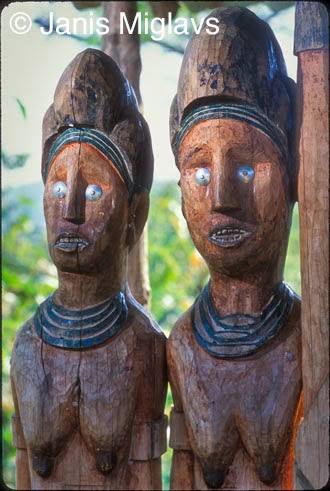
The Konso didn't think to preserve the wagas (wakas) until local and outside thieves began stealing them when the wooden statues became a red hot commodity for collectors and museums. They are cool looking.  Konso tribe, Ethiopia, Africa.

Wooden statues to honor their heros

Ethiopia's Konso tribe carves wooden statues called wagas (wakas) as grave markers to commemorate tribal heros. One elder defined a hero as either one who has been a good tribal leader/administrator or someone who killed a wild animal threatening the village. In the olden days, the tribe erected wagas for a warrior who killed an enemy. 

Since they are unique, collectors and museums from around the world have stolen many wagas. Naturally, the Konso have become quite protective of them. 

But I had spent days interviewing the elders to learn about their myths, stories and archetypal dreams, (plus I have a face even my wife's mother trusted—after I had been married for 8 years), so on both of my trips, amazingly, I was allowed free access to photograph all of the wagas. 


Originally these wagas (wakas) were totally exposed to weather's harsh erosion. Now a small tin roof (seen in the photo below) was errected. Konso tribe, Ethiopia, Africa.
Konso tribe, Ethiopia, Africa.


These are the hero's wifes in the grouping pictured below.  Konso tribe, Ethiopia, Africa.
The hero is the tallest wooden statue. The smaller ones surrounding him are his wives and children.  Konso tribe, Ethiopia, Africa.
This is the well prepared hero from the grouping pictured above. I could never find out why someone gave him a crown of vines. Konso tribe, Ethiopia, Africa.


I photographed these wagas on my 2001 trip. By my 2007 trip, they had disappeared. Konso tribe, Ethiopia, Africa.


This is the son of the hero for whom these wagas were errected. He is represented by one of the small wooden figures behind him on the left. Konso tribe, Ethiopia, Africa.


Konso tribe, Ethiopia, Africa.

Behind the father and his sons, you can make out the feet and torso of some family wagas. Konso tribe, Ethiopia, Africa.

On my second trip to the Konso, one of the village women challenged me when I wanted to photograph this site where waga once stood. The local culture minister jumped in to my rescue to explain I had permission from the elders. I must say, as you can see by his terse body language, he was a little harsh with the poor woman. I wanted to hug her and thank her for what she was trying to do. But me knowing only 20 words of Konso stopped me from any serious communication.  Konso tribe, Ethiopia, Africa.


On my first trip, I was shown this storage room full of wagas recovered from thieves. Then, with a smile, the caretaker offered me one. Wow, I could easily picture the wooden statue in my living room. But that was exactly the problem, so could lots of other collectors and museums. I declined the kind offer and took a photo to hang in my living room.  There is now a Konso Cultural Center displaying wagas.  Konso tribe, Ethiopia, Africa.